
Lake Eyasi: Travel Guide
Lake Eyasi is a shallow soda lake below a steep escarpment, south-west of the Ngorongoro highlands and about four hours from Arusha. It is home to the Hadzabe, one of Africa's last hunter-gatherer peoples, and their Datoga neighbours. People come here for a morning with them rather than for wildlife.
Lake Eyasi at a glance
| Where | Below the Eyasi escarpment, south-west of the Ngorongoro highlands |
| From Arusha | About 4 hours with stops; about 50 km from Karatu |
| Known for | Meeting the Hadzabe hunter-gatherers and the Datoga blacksmiths |
| Best time | All year; the dry months make the gravel roads easier |
| Fees | Local district and community fees, not park fees; included in our tours |
| How long to stay | A morning on the way to the Ngorongoro Crater, or one night to join a dawn hunt |
Why go to Lake Eyasi
Lake Eyasi is a long, shallow soda lake at the foot of a steep escarpment. Its level depends on the rain: after a wet year it spreads wide, and in a long dry season much of it can dry out. The land around it is dry bush, with irrigated onion fields around the small town of Mang'ola.
People come here for culture rather than wildlife. Lake Eyasi is home to the Hadzabe, one of Africa's last hunter-gatherer peoples, and to their Datoga neighbours. A morning here is a very different experience from a game drive, and it fits easily into a safari that includes the Ngorongoro Crater.
The Hadzabe
The Hadzabe number roughly a thousand people. They speak a language with click sounds that linguists usually treat as unrelated to any other language. Some still live mainly from hunting and foraging; others also rely on visitors, trade and farming.
With a local guide, you walk with a small group through the bush as they track animals, dig for roots, collect berries and look for wild honey. They also show you how they make and shoot their bows. They usually hunt at dawn, so if you want to go with them at first light, you need to stay a night near the lake.
The Datoga
The Datoga are pastoralists who keep cattle in the same area. Many are skilled blacksmiths who turn scrap metal into arrowheads and jewellery, and they trade arrowheads with the Hadzabe. A visit usually includes watching the smiths at work and time with a Datoga family at their homestead.
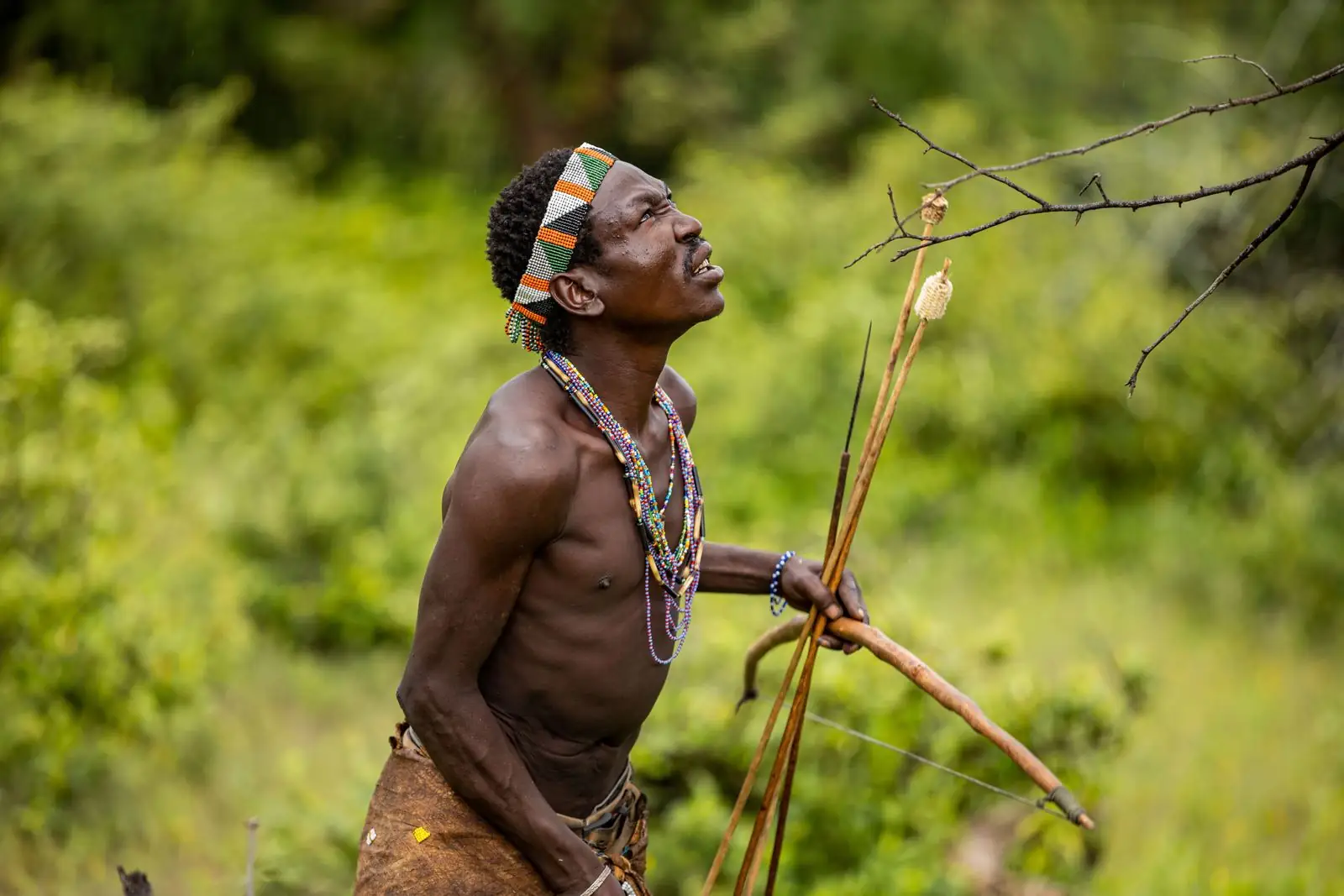
Visiting with respect
- Visits are arranged through local guides from the community, who translate and make sure fees reach the people you meet.
- Ask before taking photos, and accept a no.
- Wear comfortable shoes and light, neutral clothes; you walk through thorny bush.
- Expect a glimpse of daily life, not a performance. The Hadzabe today live between their traditions and a changing world.
Fees
Lake Eyasi is not a national park, so TANAPA park fees do not apply. Visitors pay local fees, such as a district fee and community fees for the cultural visits, which are set locally and change from time to time, so we do not list them here. On our tours all of these fees are included in the price.
Getting there from Arusha
The route follows the main road west through Mto wa Mbu to Karatu, then turns south-west on a partly gravel road down to the lake: about 50 km and roughly 1½ to 2 hours from Karatu, and about 4 hours from Arusha with stops. Many visitors stay in Karatu and visit the Ngorongoro Crater the next day.
- By road
- Arusha
Lines show the order of travel, not the exact roads.
Where you will stay
- At Lake Eyasi: a few lodges and tented camps near the lake, needed if you want to join a dawn hunt.
- In Karatu: farm lodges in the green highlands, about 1½ to 2 hours away and close to the Ngorongoro Crater.
Practical tips
- Start early: the bush is cooler in the morning and the Hadzabe are most active then.
- Bring a hat, sunscreen and water; it is hot and dry around the lake.
- Combine Lake Eyasi with the Ngorongoro Crater, which is on the way back towards Arusha.
Questions travellers ask
Who are the Hadzabe?
The Hadzabe (also called Hadza) are one of the last peoples in Africa who still live largely by hunting and gathering. They number roughly a thousand people, living around Lake Eyasi, and speak their own language with click sounds. Some still live mainly from hunting and foraging, while others also depend on visitors, trade and farming.
Is visiting the Hadzabe ethical?
It can be, if it is done with respect. Visits are arranged through local guides from the community, fees go to the community, and you should ask before taking photos. Expect a glimpse of daily life, not a show, and remember that the Hadzabe today live between their traditions and the modern world around them.
Can I join a Hadzabe hunt?
The Hadzabe usually hunt at dawn, before you can arrive from Arusha or Karatu. To go out with them at first light, add a night at Lake Eyasi to your trip.
Is Lake Eyasi a national park?
No. It lies outside the national parks, so there are no park fees. Visitors pay local fees to the district and the communities instead; on our tours these are included.
How far is Lake Eyasi from Arusha?
About 4 hours with stops, through Mto wa Mbu and Karatu. From Karatu it is about 50 km, roughly 1½ to 2 hours, partly on gravel roads.
Plan your safari with a local team
Tell us your dates, group size and interests, and we reply within 24 hours with an itinerary and a clear price.
