
Lake Manyara National Park: Safari Guide
Lake Manyara National Park lies at the foot of the Great Rift Valley escarpment, about two hours west of Arusha. It is small, but in a single game drive you pass through green groundwater forest, open grassland and the shore of a shallow soda lake, with baboons, elephants, giraffes and hippos along the way.
Lake Manyara at a glance
| Size | The original park covered about 325 km², of which about 230 km² is lake; the Marang Forest on the escarpment was added in 2009 |
| Status | A national park since 1960, inside the Lake Manyara Biosphere Reserve recognised by UNESCO in 1981 |
| From Arusha | About 115 km, 2 to 2½ hours by tarmac road |
| Best time | June to October for mammals; November to May for green scenery and birds |
| Park fee (adult, 2026) | $59.00 per 24 hours ($53.10 from 15 March to 15 May) |
| How long to stay | Half a day on the way to the crater, or a full day trip from Arusha |
What makes Lake Manyara different
The park lies in a narrow strip between the wall of the Great Rift Valley and a shallow soda lake. Springs at the foot of the escarpment feed a green groundwater forest near the gate, so the first part of the game drive feels more like jungle than savannah. Further in, the forest opens onto grassland, acacia woodland and the lake shore.
Because the park is small and close to the main road west, it is easy to combine with other places. Many safaris stop here on the way to the Ngorongoro Crater, or spend the last morning here before driving back to Arusha.
Wildlife you can expect
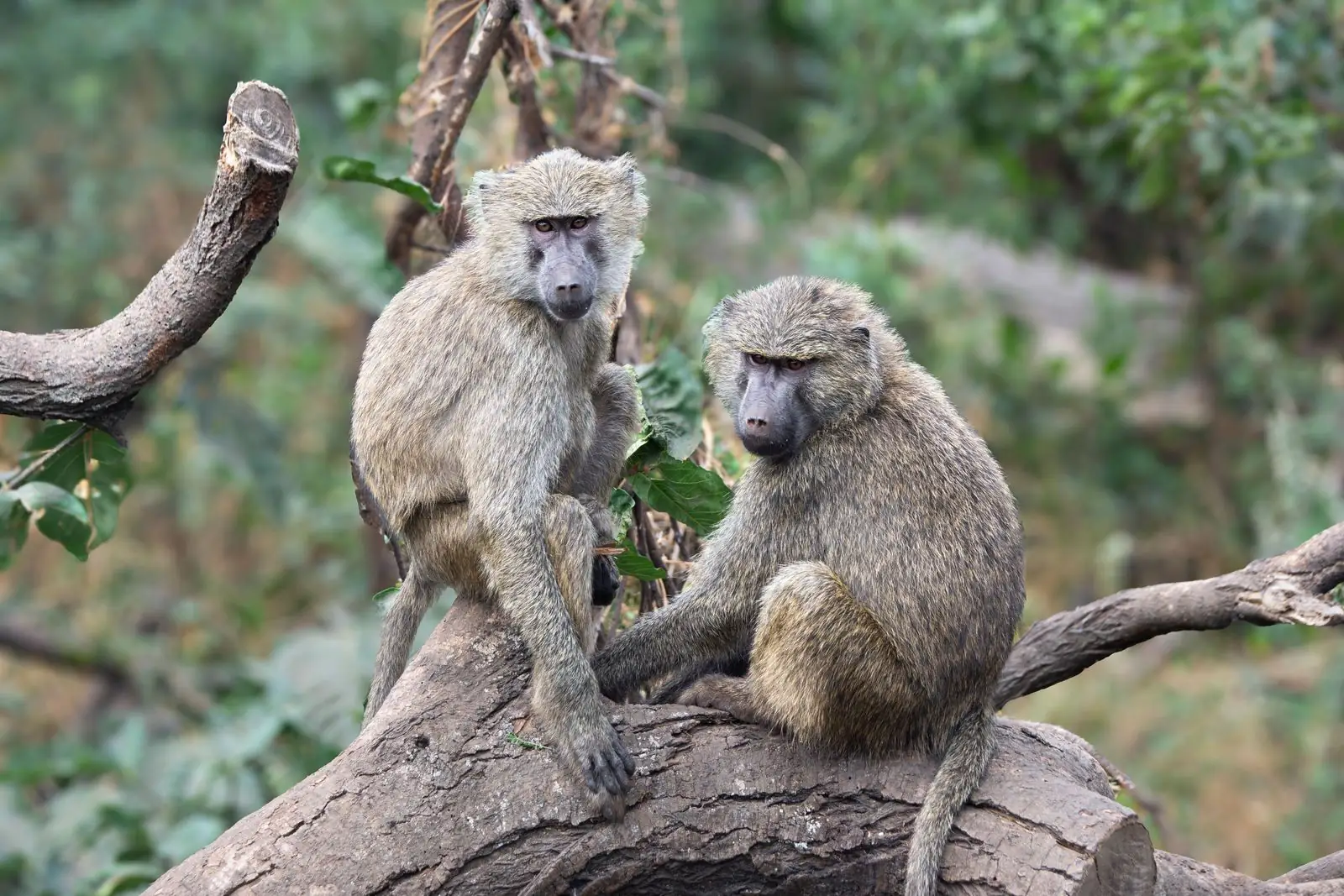
- Olive baboons and blue monkeys: large baboon troops live in the forest and along the roads, and blue monkeys move through the trees.
- Elephants: often seen feeding in the forest and woodland, sometimes very close to the track.
- Giraffes, zebras, buffalo, wildebeest, impala and warthogs: on the grassland between the forest and the lake.
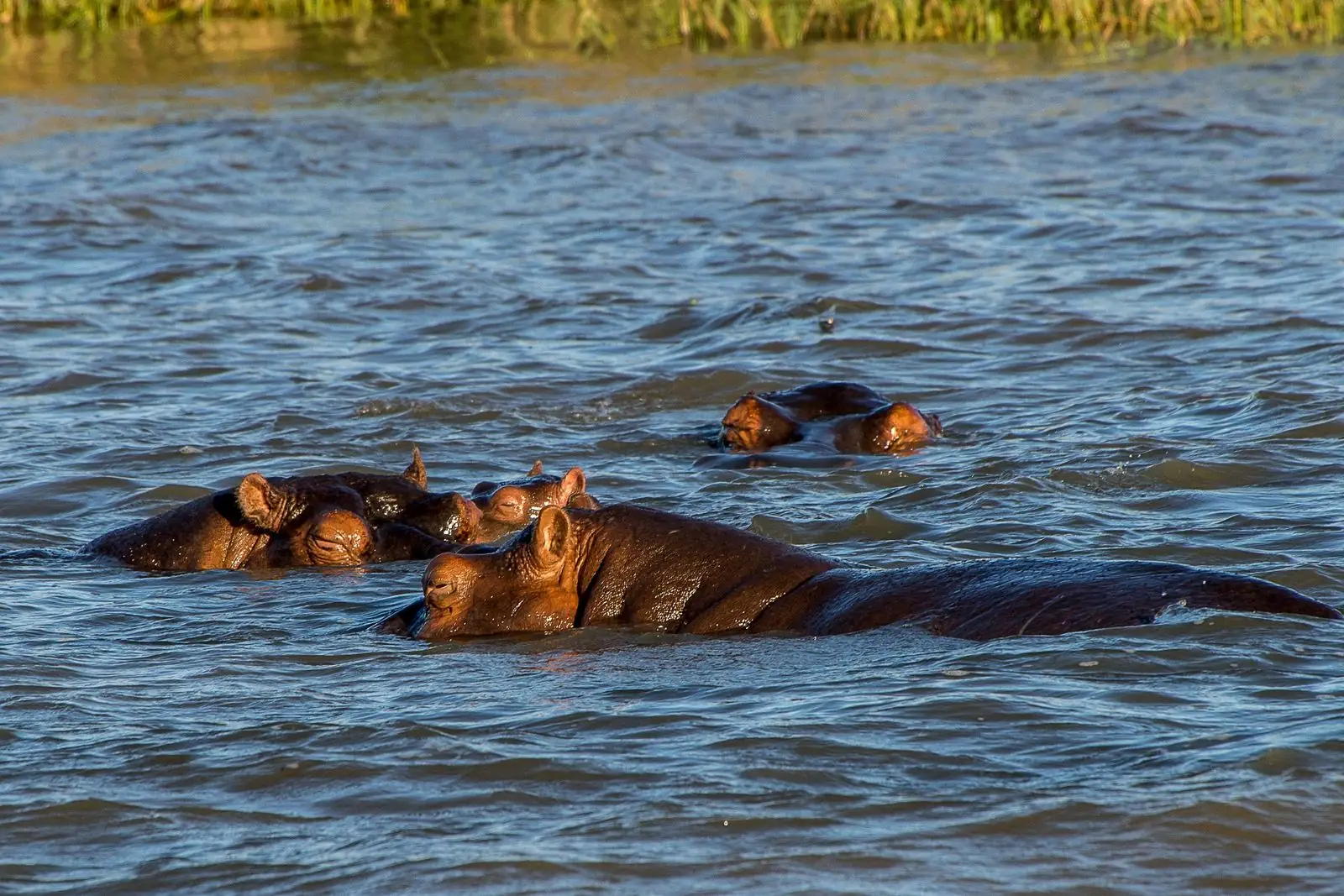
- Hippos: the hippo pool near the lake shore is one of the stops on most game drives.
- Lions: present but not seen every day. Lions here sometimes rest in trees, a habit the park is known for, but sightings are occasional.
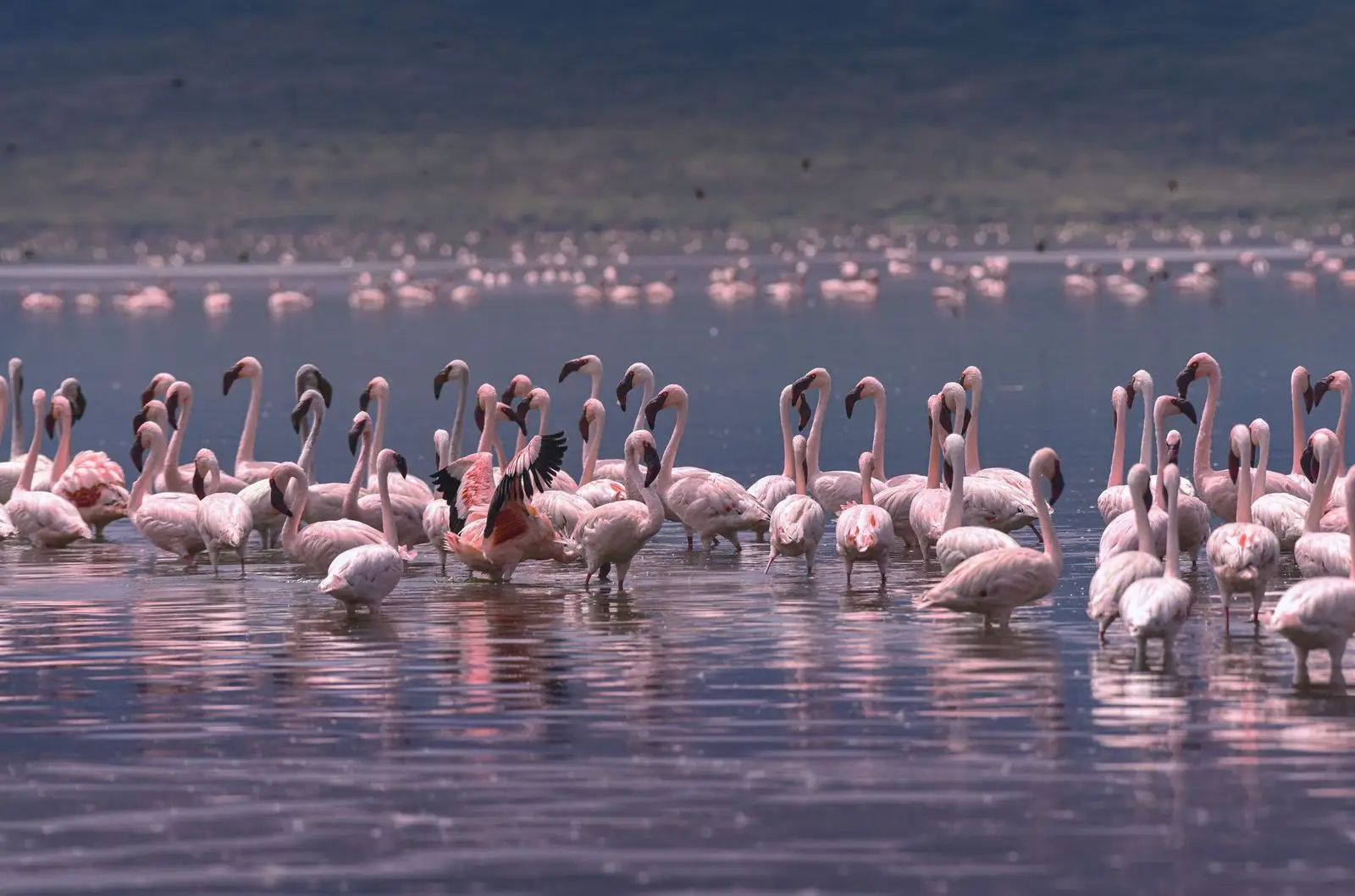
- Birds: more than 350 species have been recorded. Flamingos, pelicans and storks gather on the lake when the water level suits them.
When to go
- June to October: the dry season. The grass is short and animals come to the springs and the lake, so mammals are easier to see.
- November to May: the rains. The park is green and full of birds, the forest is at its best and park fees are lower from 15 March to 15 May. Some tracks near the lake can be muddy.
For the whole country, see the best time for a Tanzania safari.
Park fees in 2026
Fees are charged per person for every 24 hours in the park. These are the rates for non-resident visitors, including 18% VAT:
| Fee | 16 May – 14 March | 15 March – 15 May |
|---|---|---|
| Adult, 16 and over | $59.00 | $53.10 |
| Child, 5 to 15 | $17.70 | $17.70 |
Children under 5 enter free. Example: a day trip in August for two adults costs 2 × $59.00 = $118.00 in park fees. On our safaris the fees are included in the price.
Source: Tanzania National Parks (TANAPA) tariff, checked October 2026. The government can change fees at any time; any increase after you book is shown in our list of exclusions.
Getting there from Arusha
The road goes west from Arusha on tarmac through Makuyuni to the small town of Mto wa Mbu, which sits just outside the park gate: about 115 km and 2 to 2½ hours. The same road continues up the escarpment to Karatu and the Ngorongoro Crater, which is why Lake Manyara fits so easily into a longer safari.
- By road
- Arusha
Lines show the order of travel, not the exact roads.
Day trip or part of a safari?
- Day trip from Arusha: two game drives with a picnic lunch, back in Arusha by early evening. See our Lake Manyara Day Trip.
- On the way to the crater: a half-day game drive on the first day, then a night in Karatu before the Ngorongoro Crater.
- At the end of a safari: a morning game drive on the last day, then the drive back to Arusha.
Where you will stay
- On the escarpment above the park: lodges with views over the lake and the Rift Valley.
- In Mto wa Mbu: simpler lodges, guesthouses and campsites just outside the gate.
- In Karatu: further up the road on the escarpment, a good base if the Ngorongoro Crater is next.
Practical tips
- Keep windows closed and food out of sight near the baboons. They are used to vehicles and quick to grab food.
- Look up as well as ahead: elephants, monkeys and the occasional lion are easy to miss among the trees.
- Bring binoculars for the birds along the lake shore.
- The park also has a treetop walkway in the forest and, when the water is high enough, canoe trips on the lake. Both cost extra; ask us if they are running when you travel.
Questions travellers ask
Is Lake Manyara worth visiting?
Yes, if you want variety in a short time. In one day you drive through shady forest, open grassland and along a lake shore, and it fits easily on the road between Arusha and the Ngorongoro Crater. It has fewer big cats than the Serengeti, so it works best as part of a longer trip or as a relaxed day out from Arusha.
How far is Lake Manyara from Arusha?
The main gate is about 115 km from Arusha by tarmac road, through Makuyuni and Mto wa Mbu. The drive usually takes 2 to 2½ hours.
Will I see tree-climbing lions in Lake Manyara?
Possibly, but do not count on it. Lions in the park sometimes rest in trees, but sightings are occasional. Elephants, baboons, giraffes, buffalo and the hippo pool are much more reliable.
Are there flamingos at Lake Manyara?
Sometimes. Flamingo numbers rise and fall with the season and the water level of the lake, and some months there are very few. Your guide will know where the birds are when you visit.
How much is the Lake Manyara park fee?
In 2026 it is $59.00 per adult for every 24 hours from 16 May to 14 March, and $53.10 from 15 March to 15 May, including VAT. Children aged 5 to 15 pay $17.70 and children under 5 enter free. On our safaris the fees are included in the price.
Plan your safari with a local team
Tell us your dates, group size and interests, and we reply within 24 hours with an itinerary and a clear price.
