
Lake Natron: Travel Guide
Lake Natron is a shallow soda lake on the Rift Valley floor north of the Ngorongoro highlands, about four to five hours from Arusha. It is the main breeding site for East Africa's lesser flamingos, and above it rises Ol Doinyo Lengai, the Maasai "Mountain of God". Come for the walks, the landscape and the volcano rather than for big game.
Lake Natron at a glance
| Where | The Rift Valley floor north of the Ngorongoro highlands, close to the Kenyan border |
| Status | Not a national park; a Ramsar Wetland of International Importance since 2001 |
| From Arusha | About 4 to 5 hours by road with stops, the last part on rough roads |
| Known for | Lesser flamingos, Ol Doinyo Lengai, the Ngare Sero waterfall and ancient human footprints |
| Fees | Local district and village fees instead of park fees; included in our tours |
| How long to stay | Two days at the least; three if you want a rest day before the volcano climb |
Why go to Lake Natron
Lake Natron is a shallow soda lake in a very hot, dry corner of northern Tanzania. Its water is so alkaline, with a pH of up to about 10.5, that few animals can live in it. That harsh water is exactly why the lesser flamingos come: the algae they eat grow well in it, and the caustic mudflats keep predators away from their nests.
This is not a game-viewing destination. You come for the landscape: the volcano rising above the plains, the red and white crusts of the lake, the walks with local Maasai guides and the feeling of being far from the busy parks.
Flamingos
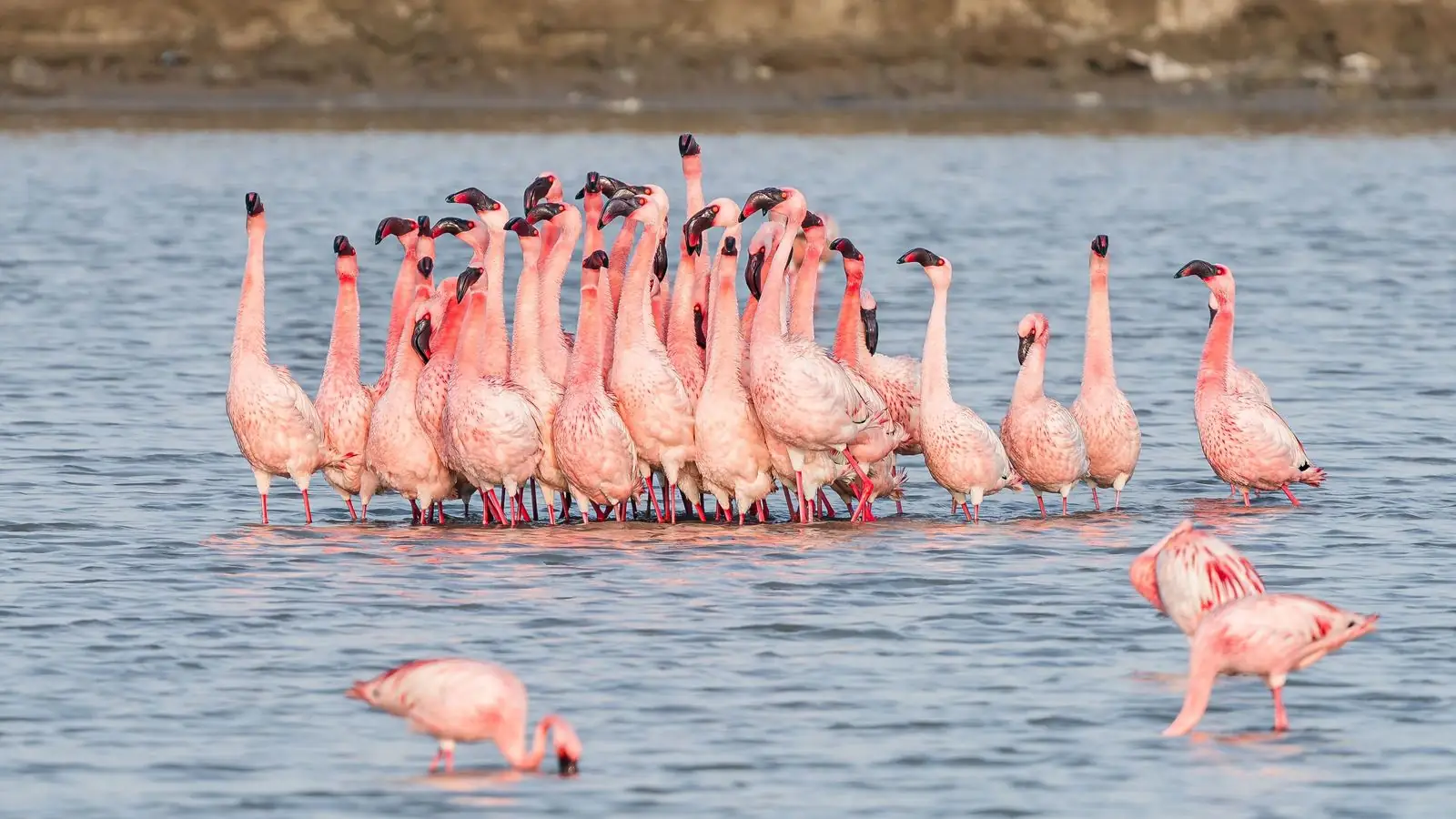
Lake Natron is the main breeding site for the lesser flamingos of East Africa. Tanzanian officials say that about 75% of the world's lesser flamingos use the lake in the breeding season. Breeding does not happen every year in the same way; it depends on rainfall and the water level.
The nesting colonies are far out on the mudflats, where neither predators nor people can reach them. What visitors see are flocks feeding in the shallows near the shore, usually on a walk in the late afternoon from Engare Sero. Numbers change from month to month.
Things to do
- Ngare Sero waterfall: a walk up a narrow gorge with a local guide, wading through the stream between steep rock walls to a waterfall with pools where you can swim.
- Flamingo walk: a walk across the flats towards the lake shore, best in the late afternoon.
- Engare Sero footprints: more than 400 human footprints preserved in volcanic mud near the lake, thought to be roughly 5,000 to 19,000 years old.
- Maasai village visit: time with a Maasai family, arranged through the local community.
- Ol Doinyo Lengai: a night climb to the crater rim for sunrise (see below).
Ol Doinyo Lengai, the Mountain of God
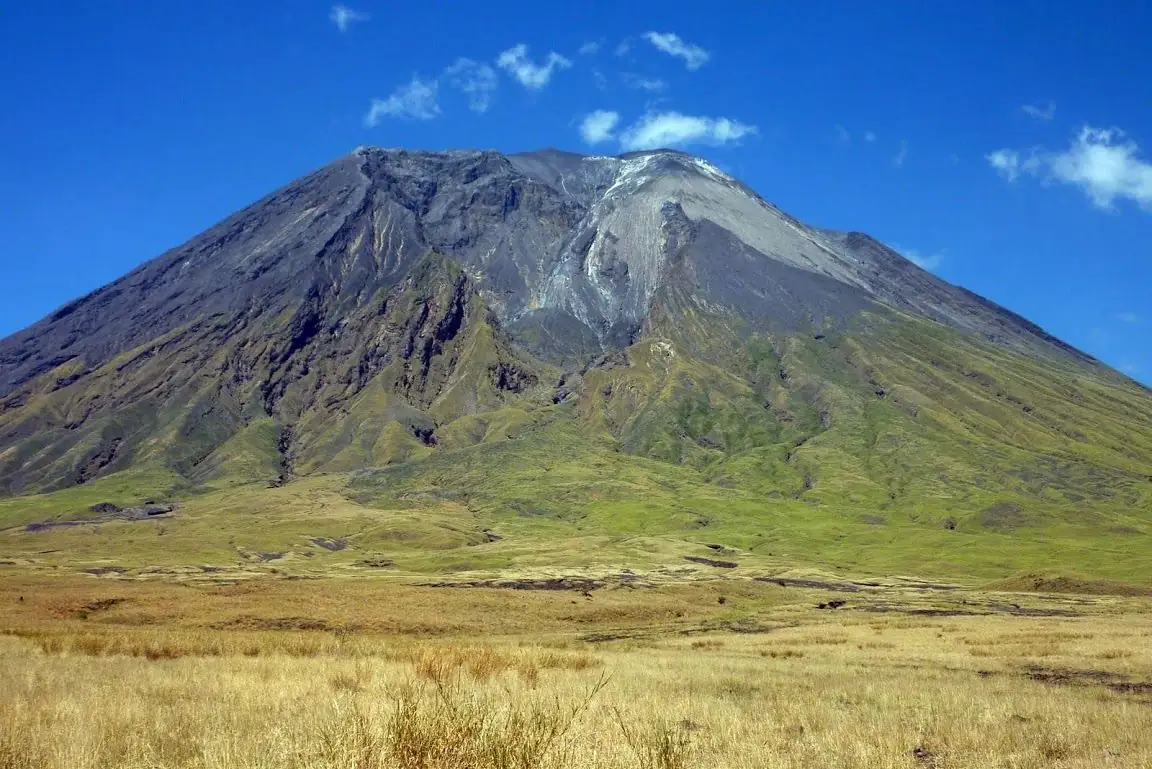
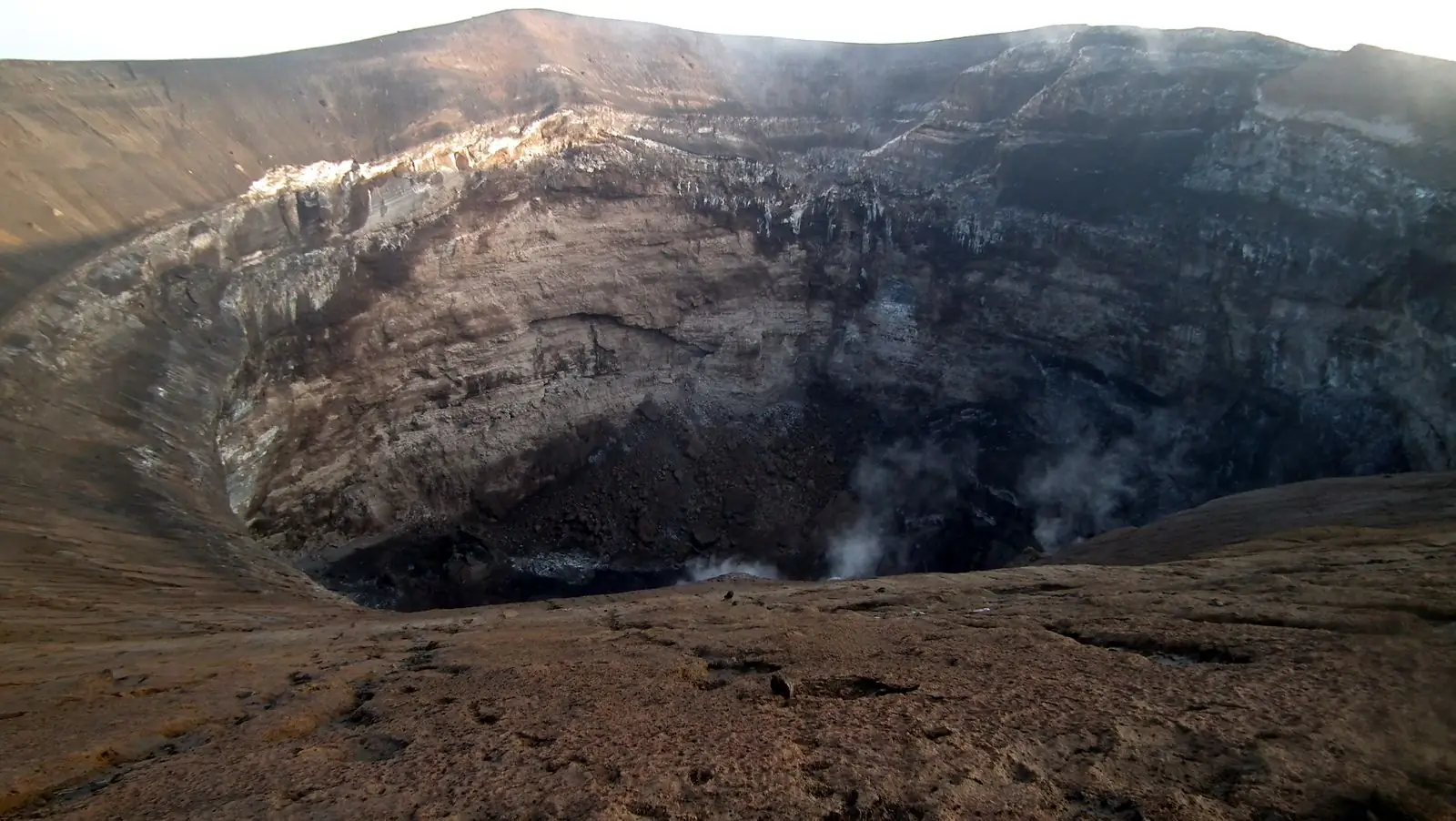
Ol Doinyo Lengai rises to about 2,962 m just south of the lake. Its Maasai name means "Mountain of God", and it is the only active volcano known to erupt natrocarbonatite lava, which is much cooler than ordinary lava and turns white as it weathers.
The climb starts around midnight so that you reach the crater rim at sunrise, before the heat. It takes about 5 to 6 hours to go up a steep slope of loose ash, and around 12 hours in total. It suits fit, experienced walkers aged 16 and over only, always with a local mountain guide, who decides on the day whether it is safe to continue. If you prefer not to climb, you can spend a relaxed morning at the lake instead.
Fees
Lake Natron is not a national park, so TANAPA park fees do not apply. Instead, visitors pay several local fees, such as district and village entry fees and community fees for the guided walks and the volcano climb. The amounts are set locally, change from time to time and are often paid in cash at the entry points, so we do not list them here. On our Lake Natron tours all of these fees are included in the price.
Getting there from Arusha
The route goes west from Arusha to Mto wa Mbu, then north along the foot of the Rift Valley escarpment through Maasai country. Allow about 4 to 5 hours with stops. The last part is on rough, unpaved roads, so a 4x4 vehicle is needed.
- By road
- Arusha
Lines show the order of travel, not the exact roads.
When to go
- June to October: the dry season, with the easiest roads. A good time for the volcano climb.
- December to February: hot, with occasional showers; the road is usually passable.
- March to May: the long rains can make the unpaved road slow and difficult. Check with us before booking.
Where you will stay
Accommodation is simple: tented camps, small lodges and campsites around Engare Sero, near the lake and the waterfall. Expect a comfortable bed and good food rather than luxury, and remember that it is very hot in the middle of the day.
Practical tips
- Plan walks for early morning and late afternoon; the middle of the day is very hot.
- Bring sandals or shoes that can get wet for the waterfall walk.
- For the volcano climb, bring hiking boots, a headlamp, at least 3 litres of water and a warm layer for the summit.
- Do not touch or walk into the lake water, which is highly alkaline.
- Ask before photographing people, and follow your local guide's advice.
Questions travellers ask
Is Lake Natron a national park?
No. The lake and the land around it are outside the national parks, in Maasai country. Visitors pay local fees to the district and the villages instead of park fees. On our Lake Natron tours these fees are included.
Will I see flamingos at Lake Natron?
Usually, but numbers change from month to month. Flocks of lesser flamingos often feed in the shallows near Engare Sero, where visitors walk out towards the shore. The nesting colonies are far out on the lake and cannot be visited.
How hard is the Ol Doinyo Lengai climb?
Very hard. It starts around midnight, climbs about 5 to 6 hours up a steep slope of loose ash and takes around 12 hours in total. It is only for fit, experienced walkers aged 16 and over, and the local mountain guide may stop the climb for safety.
How far is Lake Natron from Arusha?
About 4 to 5 hours by road with stops, through Mto wa Mbu and north along the Rift Valley. The last part is on rough, unpaved roads.
Can you swim in Lake Natron?
No. The water is highly alkaline and can irritate or burn the skin and eyes. You can swim in the fresh water of the Ngare Sero waterfall instead.
Plan your safari with a local team
Tell us your dates, group size and interests, and we reply within 24 hours with an itinerary and a clear price.
