
Ngorongoro Crater: Safari Guide
The Ngorongoro Crater is a collapsed volcano about 600 metres deep, with a floor of roughly 260 km² where lions, buffalo, zebras, hippos and a small number of black rhino live all year. It is about three hours from Arusha and can be visited on a day trip or as part of a longer safari.
The crater at a glance
| Crater floor | About 260 km², roughly 600 m below the rim |
| Conservation area | 8,292 km², a UNESCO World Heritage Site since 1979, run by the Ngorongoro Conservation Area Authority rather than by TANAPA |
| From Arusha | About 160 km to the conservation area gate, 2 to 3 hours by road, then up to the rim and down to the crater floor |
| Best time | All year, because most animals stay inside the crater |
| Fees (adult, 2026) | $70.80 entry per 24 hours, plus $295 per vehicle for each descent into the crater |
| Time on the crater floor | Usually up to about six hours per visit |
What makes the crater special
Most of the crater's animals never leave. Steep walls, a spring-fed swamp, a soda lake and open grassland give them water and food all year, so game viewing hardly depends on the season. In one morning you can pass lion prides, buffalo herds, hippos in the pools and flamingos on Lake Magadi.
The crater is only one part of the Ngorongoro Conservation Area. Unlike a national park, the area is also home to Maasai families who graze their cattle on the highlands, and it includes Olduvai Gorge, the Ndutu plains and the quieter Empakai and Olmoti craters.
Wildlife on the crater floor
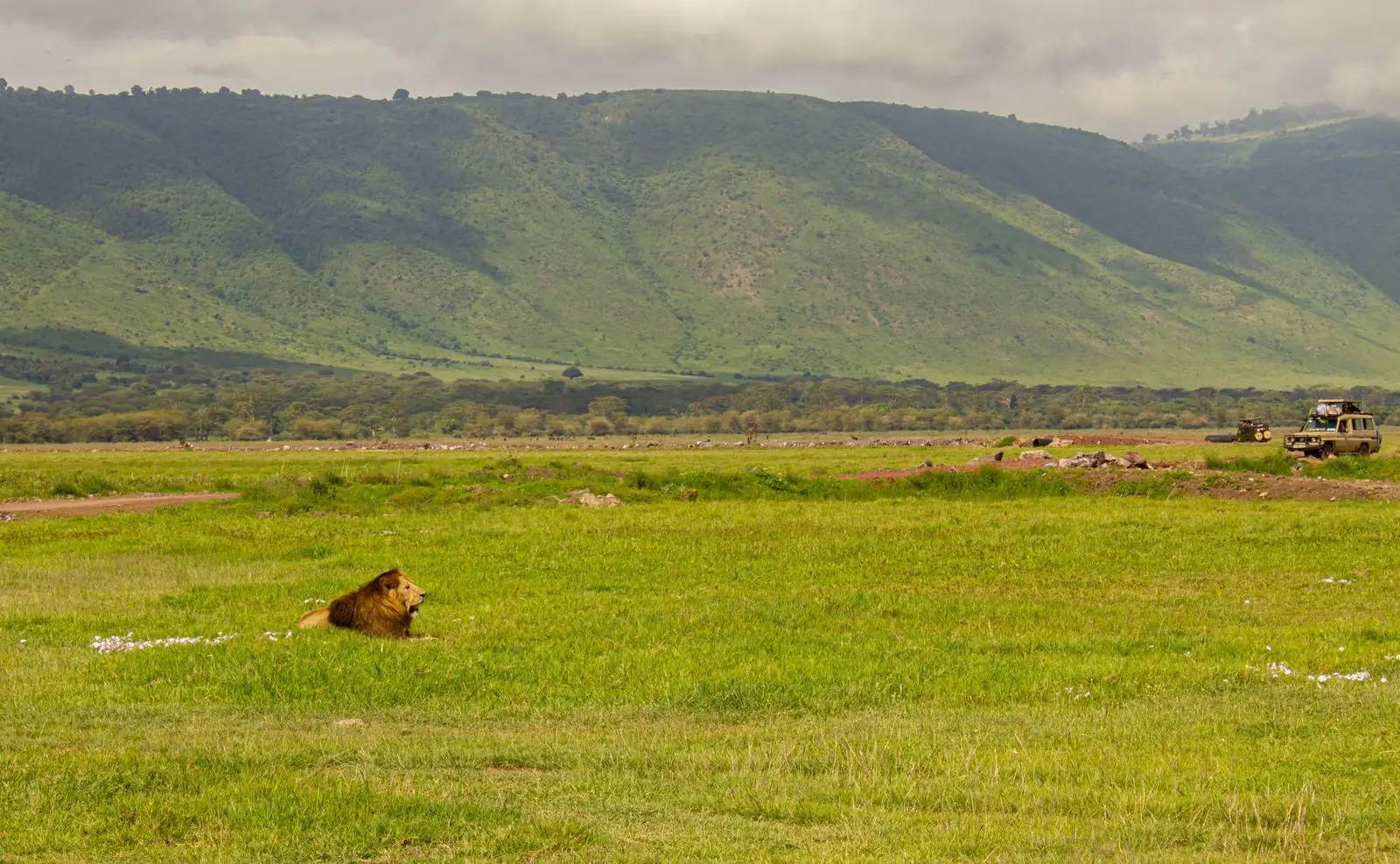
- Lions and spotted hyenas: common, and often close to the road.
- Black rhino: a small, closely guarded population. The crater is one of the best places in Tanzania to see one, usually at a distance, so bring binoculars.
- Elephants: mostly large old bulls, often near Lerai Forest. Breeding herds tend to stay on the forested slopes and highlands.
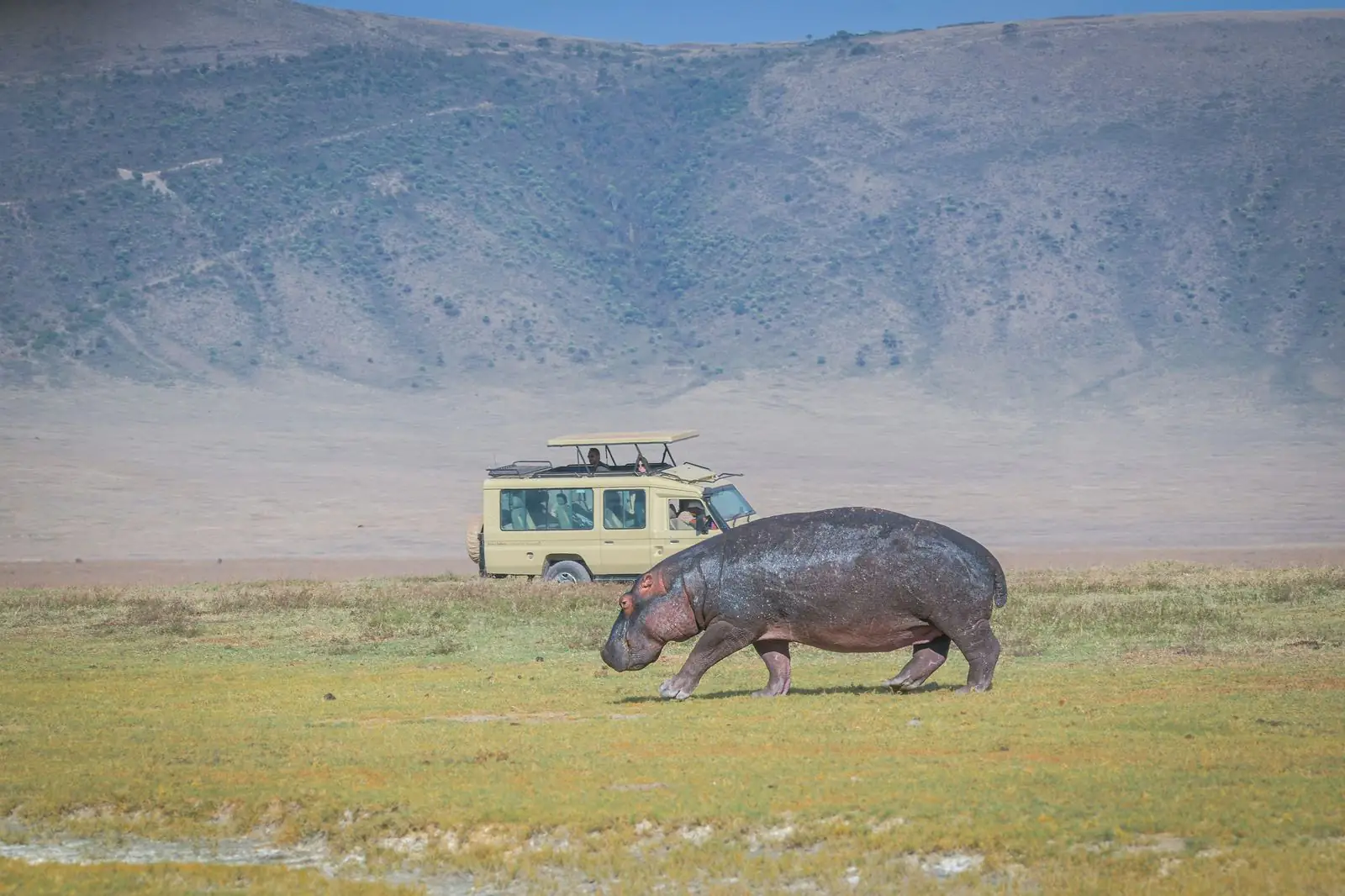
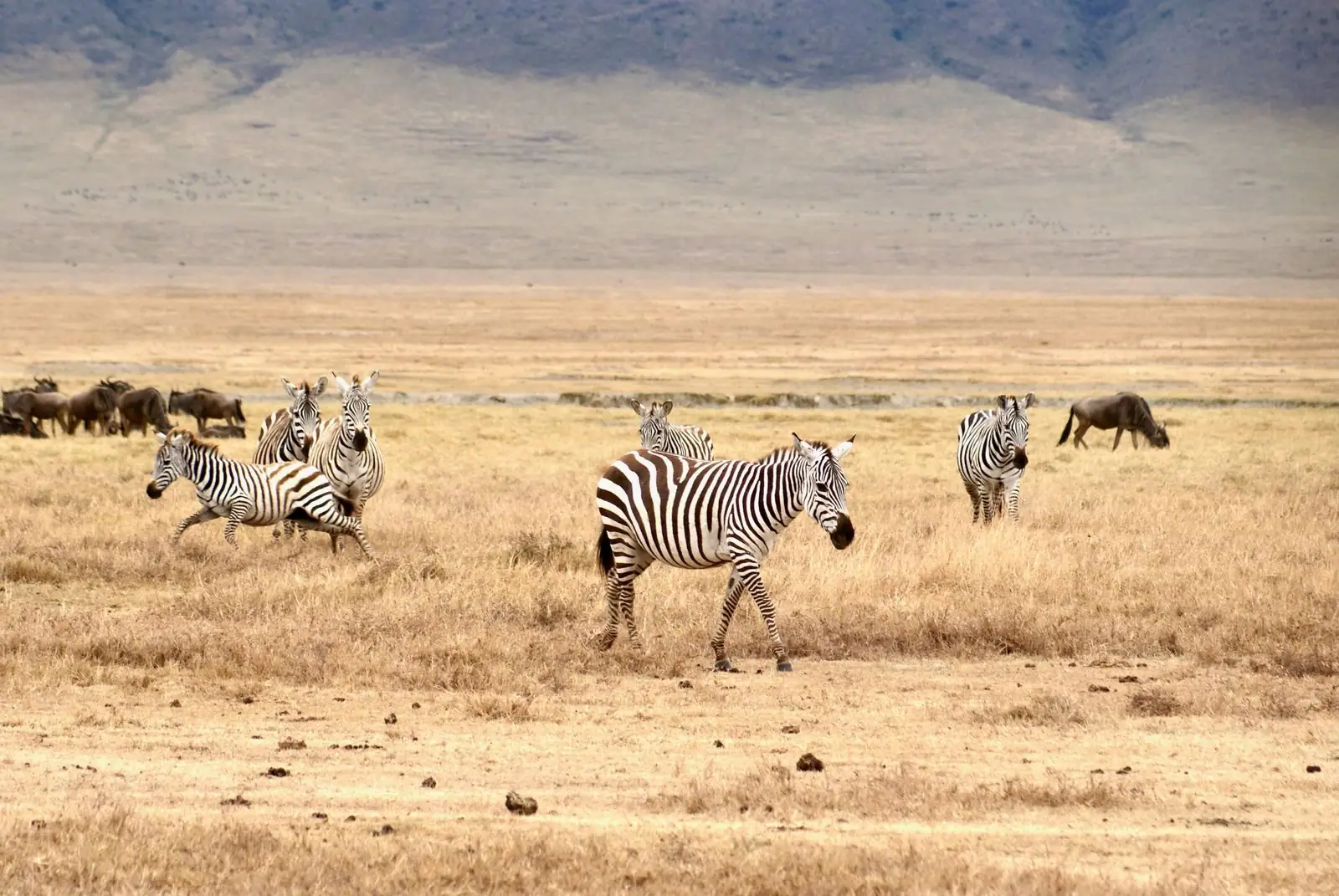
- Buffalo, zebras, wildebeest, gazelles, warthogs and hippos: seen on almost every visit.
- Flamingos: on Lake Magadi when the water level suits them.
- Leopards: present in the forested parts, but rarely seen.
- No giraffes: you will not see them on the crater floor; they live on the rim and the plains outside.
How a crater day works
Vehicles start down into the crater early in the morning. Staying on the rim or in Karatu makes an early start easy; on a day trip from Arusha you leave at about 6 a.m.
A steep road takes you down to the crater floor. You spend the morning on game drives, have a picnic lunch at a site such as Ngoitokitok Springs, and drive back up in the afternoon. Game drives on the crater floor are normally limited to about six hours.
The rim lies at over 2,200 m, so mornings and evenings are cold, especially from June to August. Bring a warm jacket even if the rest of your safari is hot.
Fees in 2026
Ngorongoro has its own fees, set by the Ngorongoro Conservation Area Authority (NCAA):
| Fee | Amount |
|---|---|
| Entry, adult (16 and over), per 24 hours | $70.80 |
| Entry, child (5 to 15), per 24 hours | $23.60 |
| Children under 5 | Free |
| Crater service fee, per vehicle, for each descent | $295 |
The crater service fee is charged per vehicle, so it costs less per person in a bigger group:
| Group | Crater fee per person | Plus entry fee | Government fees per person |
|---|---|---|---|
| 1 person | $295 ÷ 1 = $295.00 | $70.80 | $365.80 |
| 2 people | $295 ÷ 2 = $147.50 | $70.80 | $218.30 |
| 4 people | $295 ÷ 4 = $73.75 | $70.80 | $144.55 |
| 6 people | $295 ÷ 6 = $49.17 | $70.80 | $119.97 |
Lodges inside the conservation area also charge a nightly concession fee. On our safaris all of these are included in the price.
Source: Ngorongoro Conservation Area Authority tariff, checked October 2026. Fees can change without notice; any increase after you book is shown in our list of exclusions.
Getting there from Arusha
The road from Arusha is tarmac all the way to the Lodoare gate of the conservation area, through Mto wa Mbu and Karatu: about 160 km and 2 to 3 hours. From the gate a forest road climbs to the rim viewpoint, and from there the descent road leads down to the crater floor.
The crater lies on the road to the Serengeti, so most safaris visit it on the way in or on the way out. Small planes can use an airstrip on the rim, but cloud sometimes closes it, so many travellers fly to the Lake Manyara airstrip instead and drive up.
- By road
- Arusha
Lines show the order of travel, not the exact roads.
Where you will stay
- On the crater rim: lodges with views over the crater and the earliest start in the morning. Prices are higher and nights are cold.
- In Karatu: farm lodges and guesthouses among the coffee estates below the gate, with lower prices and warmer nights.
- Simba campsite on the rim: the public campsite used on camping safaris.
How long to stay
- One day: enough for the crater floor. Our Ngorongoro Crater Day Trip leaves Arusha at about 6 a.m. and returns in the evening.
- Two or three days: add Tarangire, Lake Manyara or a cultural visit to Lake Eyasi.
- Longer: combine the crater with the Serengeti. Olduvai Gorge lies on the road between them.
Questions travellers ask
Is the Ngorongoro Crater worth it?
For most travellers, yes. Because the animals stay inside the crater all year, it is one of the most reliable places in Africa to see lions and one of the best places in Tanzania to see black rhino. It is busy, though: expect other vehicles at the big sightings, especially from June to October.
Can you visit the Ngorongoro Crater on a day trip from Arusha?
Yes. It is a long day: pickup at about 6 a.m., around six hours of driving in total and a full game drive on the crater floor, back in Arusha in the evening.
How much does it cost to enter the Ngorongoro Crater?
$70.80 per adult for 24 hours in the conservation area, plus a crater service fee of $295 per vehicle for each descent. For two people sharing a vehicle that comes to $218.30 each in government fees; for six people it is about $120 each. On our safaris these fees are included.
Can you see the Big Five in the Ngorongoro Crater?
All five live there. Lions, buffalo and elephants are seen on most days, black rhino are often seen from a distance, and leopards are seen only rarely.
Can you stay overnight in the crater?
No. Overnight stays on the crater floor are not allowed. Lodges and campsites are on the crater rim, and many travellers stay in Karatu, below the conservation area gate.
Plan your safari with a local team
Tell us your dates, group size and interests, and we reply within 24 hours with an itinerary and a clear price.
