
Serengeti National Park: Safari Guide
The Serengeti is Tanzania's best-known park: about 14,750 km² of grass plains, granite kopjes and river woodland where lions, cheetahs and leopards live all year and more than a million wildebeest move through with the rains. This guide covers where to go in the park, when, what it costs and how to get there from Arusha.
The Serengeti at a glance
| Size | About 14,750 km², a UNESCO World Heritage Site since 1981 |
| From Arusha | About 7 to 7½ hours by road to central Serengeti, or a little over 1 hour by plane |
| Best time | All year; June to October for dry-season game viewing and river crossings, January to March for calving |
| Park fee (adult, 2026) | $82.60 per 24 hours ($70.80 from 15 March to 15 May) |
| Known for | The Great Migration, big cats, open plains and granite kopjes |
| How long to stay | At least two nights; three or more to follow the migration |
The four areas of the Serengeti
The park is the size of a small country, and each area feels different. Where you stay should depend on the month you travel.
- Central Serengeti (Seronera): the Seronera River valley has water all year and the most resident lions, leopards and cheetahs. It is good in every month and the easiest area to reach.
- Southern plains and Ndutu: open short-grass plains where the herds gather from December to March to give birth. The Ndutu area lies inside the Ngorongoro Conservation Area, on the Serengeti's southern edge.
- Western Corridor: a long strip towards Lake Victoria along the Grumeti River, where the herds usually pass around June and July and cross a river full of large crocodiles.
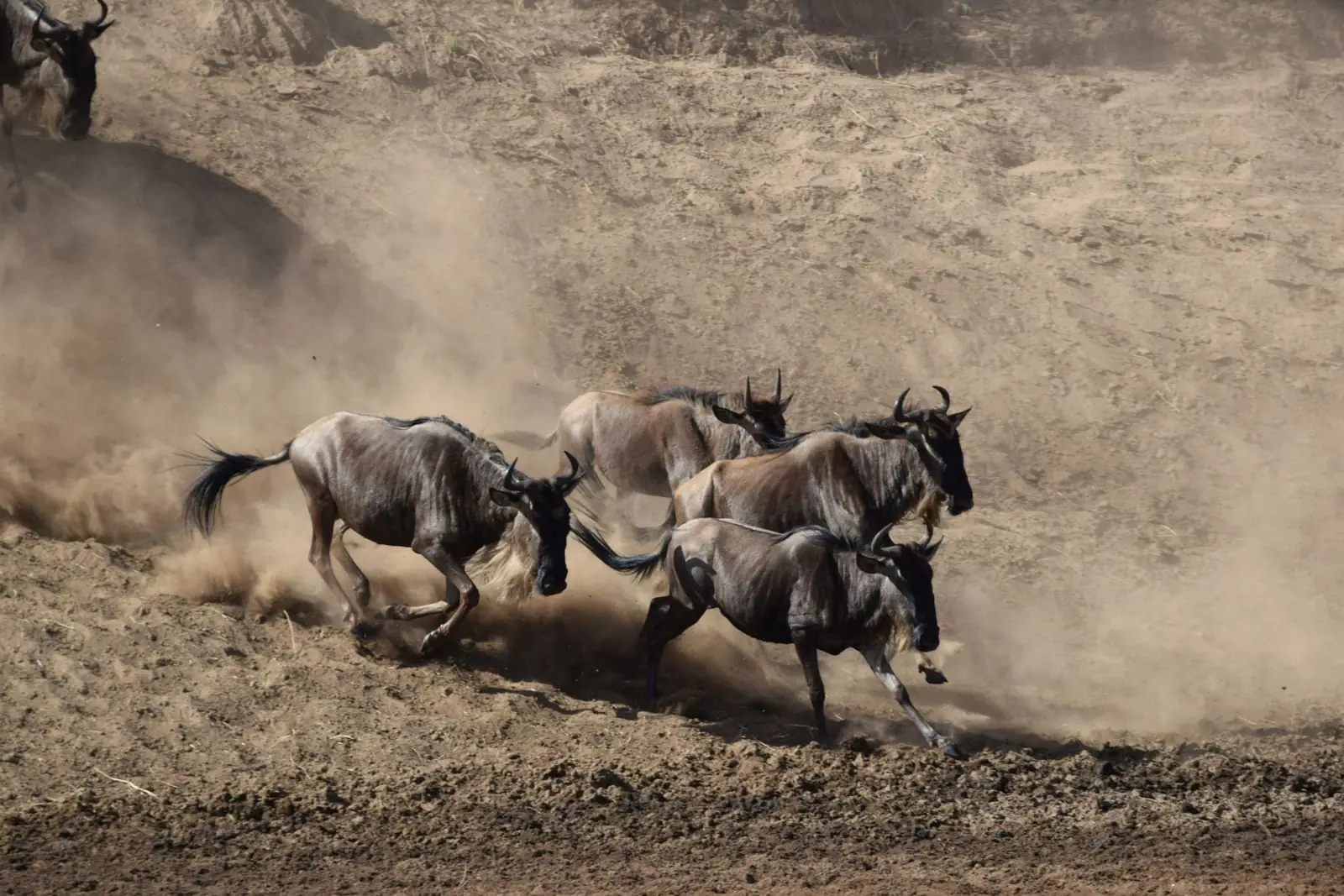
- Northern Serengeti: remote hills and woodland along the Mara River, near the Kenyan border. From about July to October this is where the famous river crossings happen.
When to go
There is no bad month in the Serengeti, because the resident animals stay all year. What changes is where the migrating herds are, how green the land is and how many other vehicles you meet.
- December to March: the herds are on the southern plains and calving peaks in February. Warm, with some showers.
- April and May: the long rains. Fewer visitors, lower park fees from 15 March to 15 May, and some camps close. The herds move through the centre and west.
- June and July: the dry season begins. The herds are in the Western Corridor, then move north.
- July to October: Mara River crossings in the north. This is peak season, with the highest prices.
- November: the short rains bring the herds back south through the east and centre of the park.
The timing changes with the rain every year. See where the herds usually are in our guide to the Great Migration month by month.
Wildlife you can expect
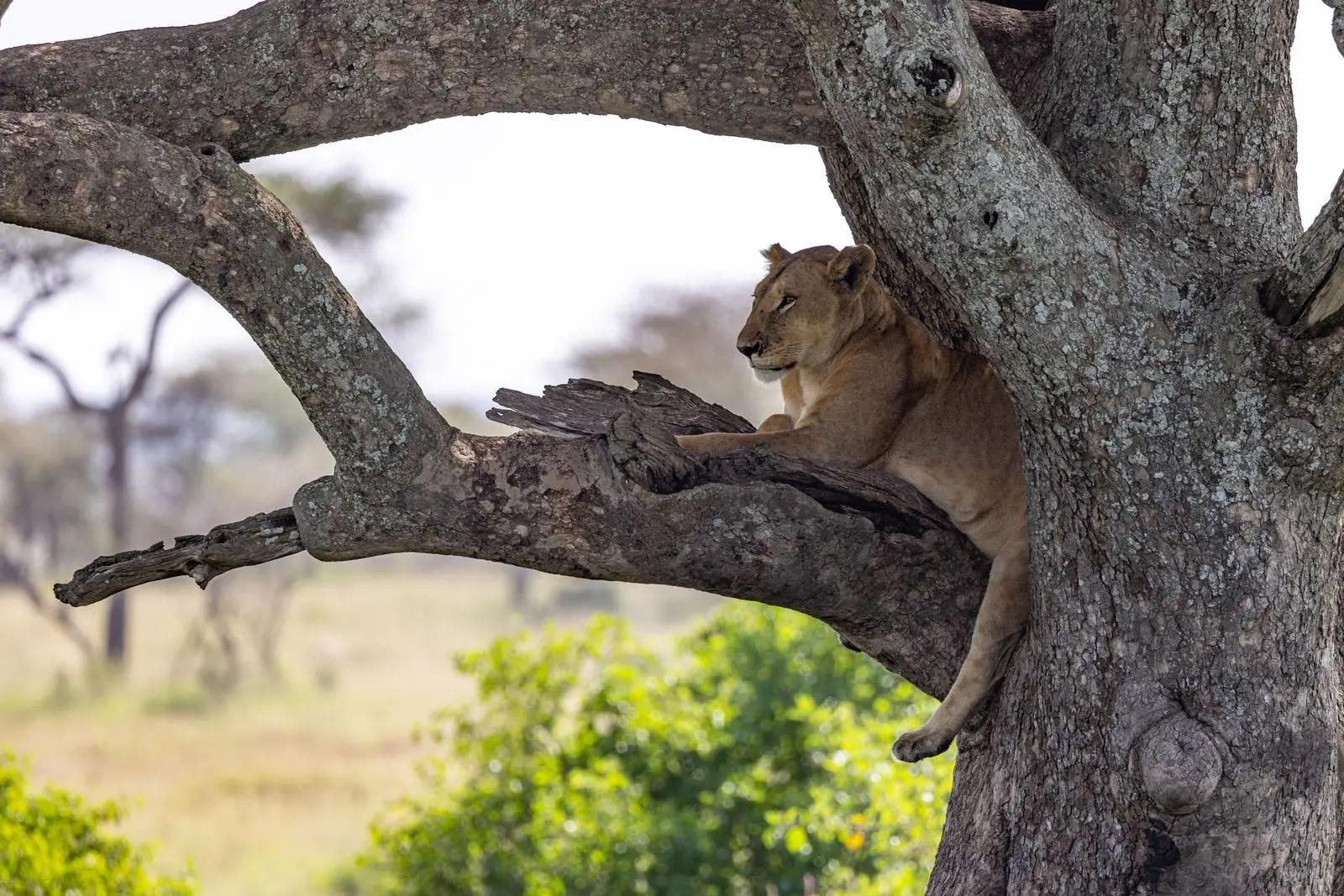
- Lions: the Serengeti ecosystem has more than 3,000, the largest lion population in Africa. Most visitors see lions on their first day.
- Cheetahs and leopards: cheetahs hunt on the open plains; leopards rest in the trees along the Seronera River and take more patience to find.
- Elephants, buffalo, giraffes and hippos: seen regularly, along with many kinds of antelope, though there are fewer elephants here than in Tarangire.
- Black rhino: present but very rarely seen. The Ngorongoro Crater is the better place to look for them.
- Birds: hundreds of species, from ostriches and secretary birds to vultures and colourful rollers.
Park fees in 2026
Fees are charged per person for every 24 hours you spend in the park. These are the rates for non-resident visitors, including 18% VAT:
| Fee | 16 May – 14 March | 15 March – 15 May |
|---|---|---|
| Adult, 16 and over | $82.60 | $70.80 |
| Child, 5 to 15 | $23.60 | $23.60 |
| Public campsite, per person per night | $35.40 | $35.40 |
Children under 5 enter free. Example: two nights in central Serengeti in August means 48 hours in the park, so 2 × $82.60 = $165.20 per adult. Lodges and camps inside the park also charge a nightly concession fee. On our safaris all of these are included in the price.
Most road safaris also cross the Ngorongoro Conservation Area on the way, which has its own entry fee of $70.80 per adult.
Sources: Tanzania National Parks (TANAPA) tariff and the Ngorongoro Conservation Area Authority (NCAA), checked October 2026. The government can change fees at any time; any increase after you book is shown in our list of exclusions.
Getting there from Arusha
By road, the route goes west through Mto wa Mbu and Karatu, over the Ngorongoro highlands and down to Naabi Hill gate: about 6 hours to the gate and 7 to 7½ hours to central Serengeti. Most safaris break the journey with a visit to Tarangire, Lake Manyara or the Ngorongoro Crater.
By air, scheduled small planes fly from Arusha Airport to the Seronera airstrip in a little over an hour, for about $180 to $270 one way (October 2026 fares). Compare both in our guide Arusha to the Serengeti: drive or fly?
- By road
- By air
- Arusha
Lines show the order of travel, not the exact roads.
Where you will stay
- Central Serengeti: the widest choice, from public campsites to lodges and tented camps, and good all year.
- Southern plains and Ndutu: seasonal and permanent camps, busiest from December to March.
- Northern Serengeti: fewer camps, mostly at higher prices, close to the Mara River and busiest from July to October.
- Mobile camps: some tented camps move during the year to stay close to the herds.
We suggest specific camps for your dates and budget when we send your itinerary, from simple camping to luxury tented camps.
Practical tips
- Stay at least two nights. One night barely leaves time for a full game drive after the long journey.
- Start early. Animals are most active in the first hours after sunrise, and the light is best for photos.
- Bring layers. Mornings can be cool from June to August, while midday is hot all year.
- Pack binoculars and, if you fly in, a soft bag.
- Stay inside the vehicle except at marked picnic sites and campsites.
- A sunrise hot air balloon flight can be added in several areas of the park, at extra cost.
Questions travellers ask
How many days do you need in the Serengeti?
At least two nights, which gives you one full day of game drives after the long journey. Three nights let you explore more than one area or follow the migration. If you are short of time, a fly-in safari saves the drive.
When is the best time to visit the Serengeti?
June to October for dry-season game viewing and the Mara River crossings, and January to March for the calving season in the south. The resident lions, leopards and cheetahs are there all year, so every month works.
How much is the Serengeti park fee?
In 2026 it is $82.60 per adult for every 24 hours from 16 May to 14 March, and $70.80 from 15 March to 15 May, including VAT. Children aged 5 to 15 pay $23.60 and children under 5 enter free. On our safaris the fees are included in the price.
Can you see the Big Five in the Serengeti?
Lion, leopard, elephant and buffalo are seen regularly. Black rhino live in the park but are very rarely seen, so most travellers complete the Big Five in the Ngorongoro Crater.
Is the Serengeti the same as the Maasai Mara?
They are one ecosystem divided by the border between Tanzania and Kenya. The Serengeti is the much larger Tanzanian part and the Maasai Mara is a smaller reserve in Kenya. The migrating herds cross between them, mainly from about July to October.
Plan your safari with a local team
Tell us your dates, group size and interests, and we reply within 24 hours with an itinerary and a clear price.
