
6-Day Marangu Route Kilimanjaro Climb
A private 6-day climb of Mount Kilimanjaro on the Marangu route, sleeping in mountain huts, with an extra day at Horombo to acclimatise and two hotel nights in Moshi, 8 days in total.
Kilimanjaro, Sleeping in Huts
Marangu is the only route on Kilimanjaro where you sleep in huts rather than tents: simple shared huts with bunk beds and mattresses at Mandara, Horombo and Kibo. The path climbs gradually from the south-east through rainforest and moorland, and you come down the same way.
We recommend the 6-day version rather than the 5-day climb: the extra day at Horombo, with a short walk higher and back, gives your body more time to adjust before the summit. If you prefer camping and an even better acclimatisation profile, our 7-day Machame climb is the better choice.
Compare with the 7-Day Machame Route Kilimanjaro Climb →
Why Climbers Choose It
- 6 days on the mountain, with an acclimatisation day at Horombo
- Huts with bunk beds and mattresses instead of tents
- Rainforest, moorland, the Saddle between Mawenzi and Kibo, and the summit
- Our own licensed guides, cook and porters, with a personal porter for your bag
- Emergency oxygen and a sleeping bag included; two hotel nights in Moshi
Altitude Profile
Approximate altitudes in metres; published figures differ between sources. D1–D6 are the days on the mountain. Day 3 is an acclimatisation day: a short walk higher and back down to sleep at Horombo again.
Your driver meets you at Kilimanjaro International Airport and takes you to your hotel in Moshi. In the afternoon your lead guide briefs you on the climb and checks your equipment.
Overnight: Hotel in Moshi (mid-range, or similar)
Meals: Dinner is not included on arrival day
↑ about 860 m · about 8 km · 3–5 hours
After breakfast you drive about an hour from Moshi to Marangu Gate and register with the park. The wide path climbs through rainforest, where you may see blue monkeys and black-and-white colobus. In the afternoon you can take a short walk to the rim of Maundi Crater near the hut.
Overnight: Mandara Hut
Meals: Breakfast, Lunch, Dinner
↑ about 1,000 m · about 12 km · 6–8 hours
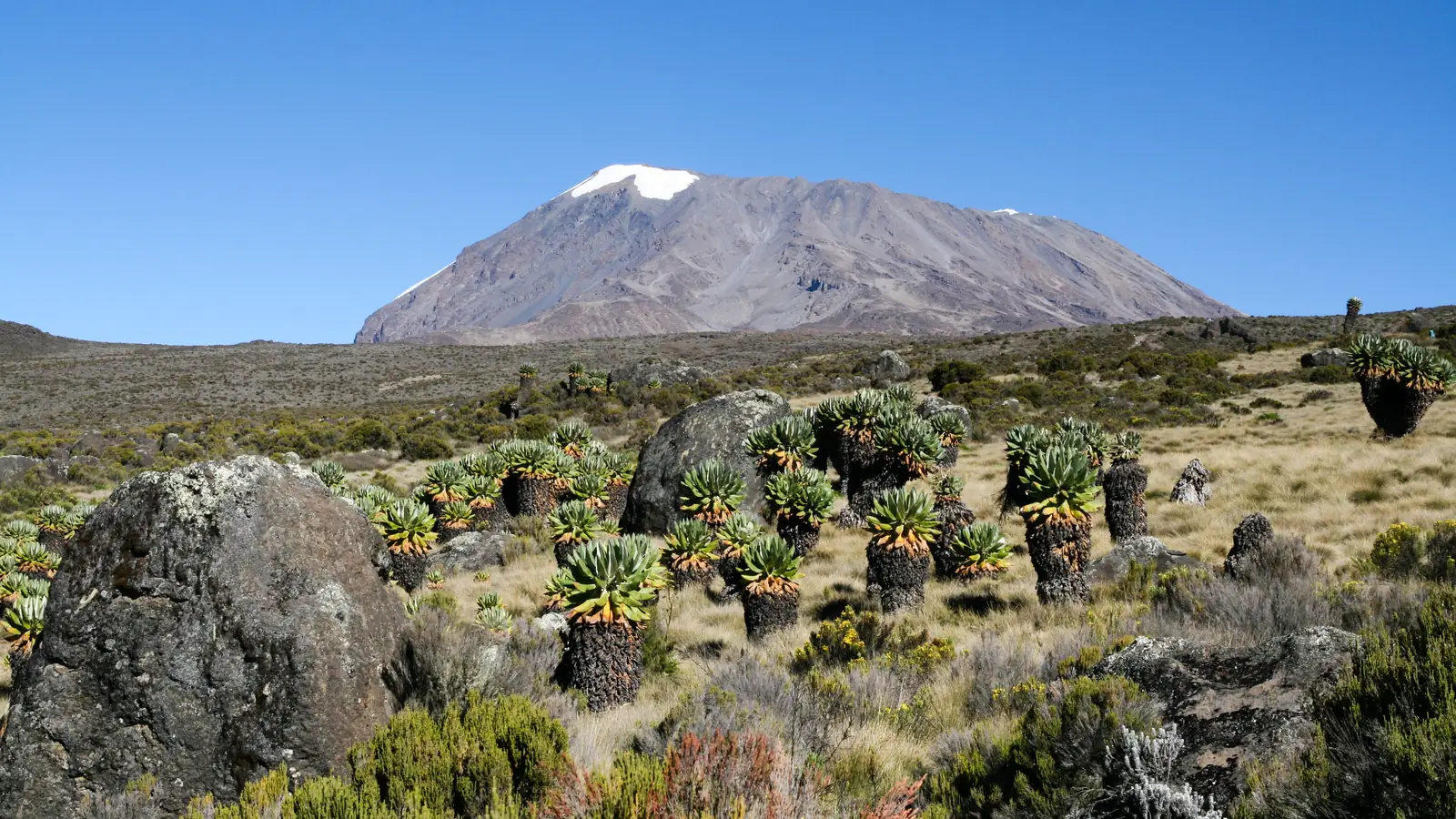
You leave the forest for open heath and moorland, with giant groundsels and lobelias, and the first views of Kibo and Mawenzi on clear days. Horombo is a busy hut village, where climbers going up meet those coming down.
Overnight: Horombo Hut
Meals: Breakfast, Lunch, Dinner
A short walk higher and back · about 2–3 hours
A day to let your body adjust. In the morning you walk up towards the Mawenzi side, higher than Horombo, and come back down for lunch and a rest. Climbing high and sleeping low like this helps prepare you for the summit.
Overnight: Horombo Hut
Meals: Breakfast, Lunch, Dinner
↑ about 980 m · about 10 km · 6–8 hours
You cross the Saddle, a wide, dry alpine desert between Mawenzi and Kibo, to Kibo Hut at the foot of the summit cone. You arrive in the afternoon, eat an early dinner, prepare your warm clothes and headlamp, and rest.
Overnight: Kibo Hut
Meals: Breakfast, Lunch, Dinner
↑ about 1,190 m, ↓ about 2,175 m · about 11–15 hours
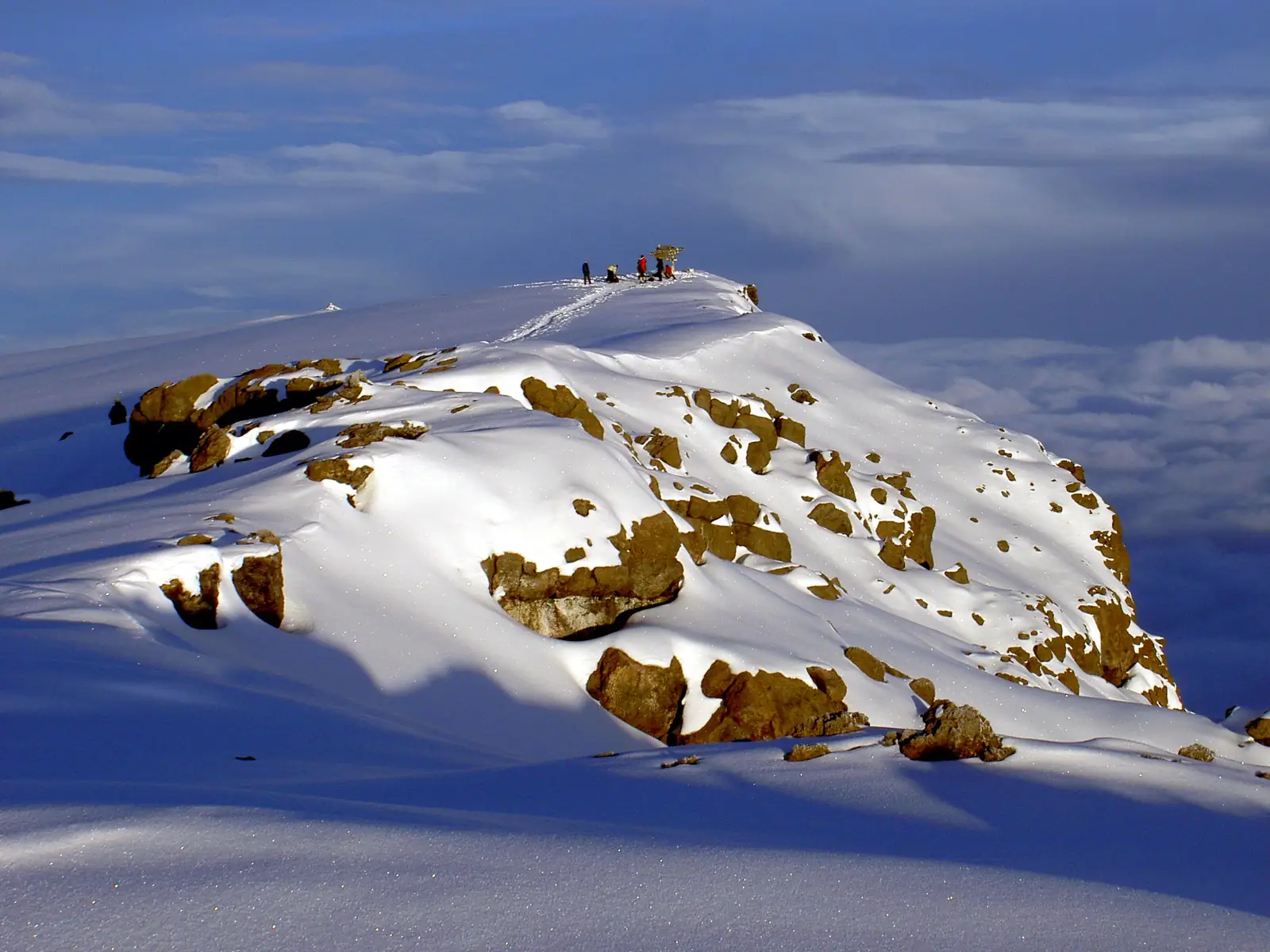
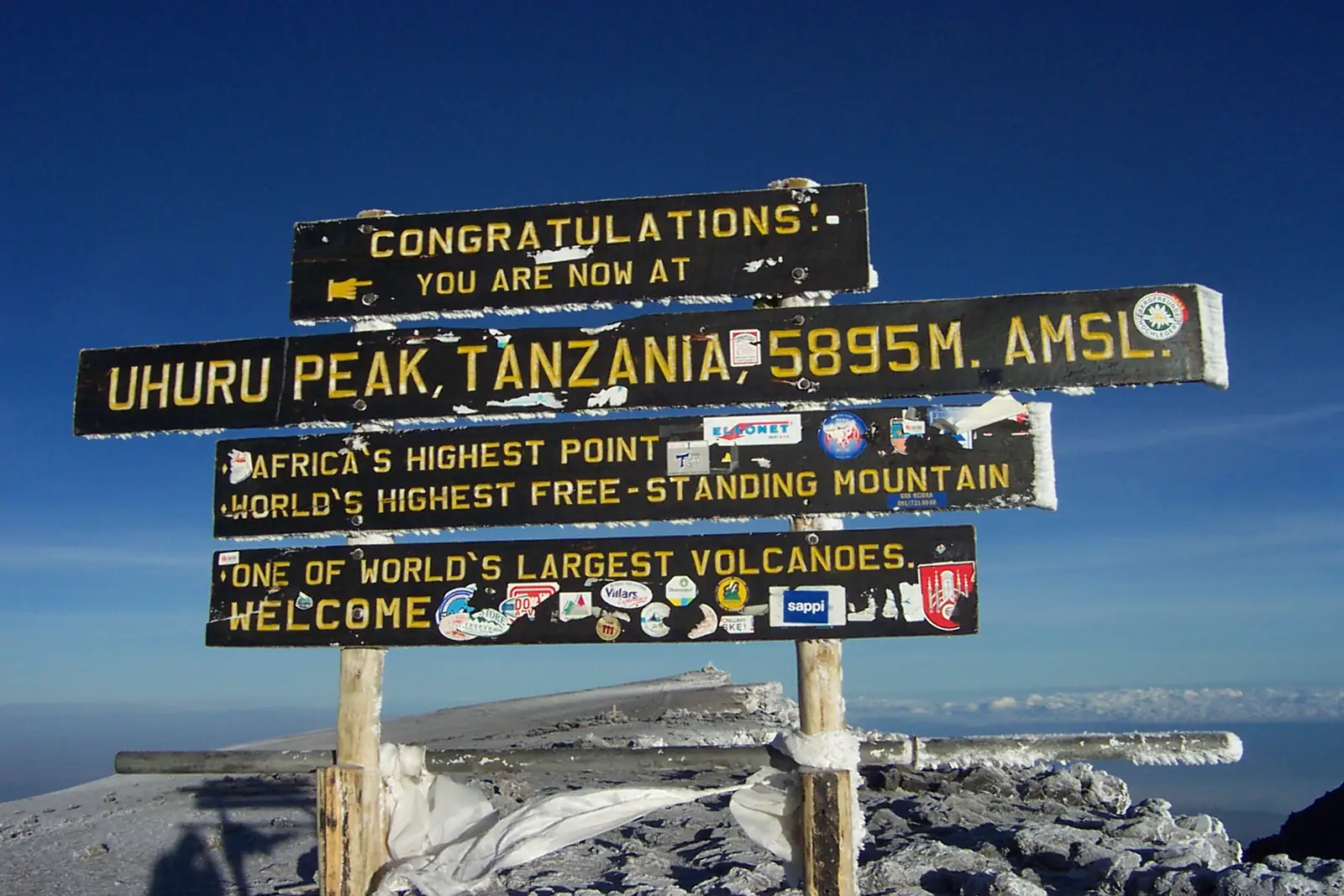
You set off around midnight and climb a steep path of loose scree by headlamp to Gilman's Point on the crater rim, then walk along the rim to Uhuru Peak, the highest point in Africa, ideally around sunrise.
After your photos you go back down to Kibo Hut for a rest and a meal, then continue down to Horombo. It is the longest and hardest day of the climb.
Overnight: Horombo Hut
Meals: Breakfast, Lunch, Dinner
↓ about 1,860 m · about 18–20 km · 5–7 hours
A long walk down through the moorland and rainforest to Marangu Gate, where you sign out of the park and receive your summit certificate. Your driver takes you back to your hotel in Moshi.
Overnight: Hotel in Moshi (mid-range, or similar)
Meals: Breakfast, Lunch
After breakfast you are transferred to Kilimanjaro International Airport, or you can continue onto one of our safaris.
Meals: Breakfast
Price Per Person — Private Climb
| Group Size | Price Per Person |
|---|---|
| 1 Person | $2,070 |
| 2 People | $1,740 |
| 3 People | $1,650 |
| 4 People | $1,600 |
| 5 People | $1,580 |
| 6 People | $1,560 |
Price per person in US dollars, by the number of people climbing together. Groups of more than 6: price on request.
Trip Notes
- Start & end: Moshi (Kilimanjaro Airport transfers available on request)
- 8 days in total: 6 days on the mountain + 2 hotel nights
- Private climb: your group only, on the dates you choose
- Huts are shared with other climbers
- Prices may change if park fees change
Includes
- Kilimanjaro National Park conservation, hut and rescue fees
- Licensed mountain guides, cook and porters from our own crew
- A personal porter to carry your main bag
- Emergency oxygen carried on the climb
- A sleeping bag
- All meals on the mountain and drinking water
- 2 nights' hotel in Moshi with breakfast
- Transfers between your Moshi hotel and Marangu Gate
- Summit certificate
Excludes
- International flights
- Tanzania visa fees
- Travel insurance covering trekking to 6,000 m and evacuation
- Tips for the mountain crew
- Personal climbing clothes and boots
- Drinks other than drinking water
- Lunch and dinner in Moshi
- Tanzania's compulsory inbound travel insurance for foreign visitors (44 US dollars per person, from 1 October 2026)
- Any government increase in park fees or taxes after booking
Questions Climbers Ask
Is Marangu the easiest route?
It has the gentlest path and you sleep in huts, but it is not easy: summit night is long, steep and cold, and the altitude is the same as on every route. The 6-day climb with an acclimatisation day gives you a better chance than the 5-day version.
What are the huts like?
Simple shared huts with bunk beds and mattresses; you share with other climbers. There are no showers. Bring your own sleeping bag liner if you like; the sleeping bag is included.
Marangu or Machame?
Marangu sleeps in huts and goes up and down the same way. Machame sleeps in tents, crosses the mountain and has a better acclimatisation profile, with one more day. If you can, choose Machame; choose Marangu if you prefer huts to tents.
When is the best time to climb?
The drier months, roughly January to early March and June to October, are the most popular. April, May and November are the wettest. We can climb all year.
What insurance do I need?
Travel insurance that covers trekking up to 6,000 metres and emergency evacuation. Please check the altitude limit in your policy before you book.
Is tipping expected?
Tipping the mountain crew is customary on Kilimanjaro and is not included in the price. We send you clear guidance before the climb.
